


This article was originally published in 2023 and most recently updated on July 2, 2026, with current information.
Tokyo is one of the world’s great hotel cities. Its luxury and boutique hotel landscape is constantly evolving: headline-making openings and careful restorations of iconic properties ensure there’s always something new to discover. Many of the city’s most coveted hotels occupy the upper floors of soaring skyscrapers, offering panoramic views alongside striking design.
Whether you’re looking for a century-old landmark, a cutting-edge design hotel, or a peaceful retreat high above the city, these are 17 of Tokyo’s best luxury hotels for 2026, all part of Afar’s Hotels We Love collection.
Aman Tokyo

Aman Tokyo offers minimalist Japanese design, expansive skyline views, and one of Tokyo’s most celebrated hotel spas.
Courtesy of Aman Tokyo
Why we love it: A true urban resort with unmatched service in the heart of the city
Rates: From $1,650
Aman Resorts made its urban debut in 2014 with Aman Tokyo, which delivers the transporting cultural experiences and superlative service it’s famous for to the center of Japan’s capital. Elevators open onto a 33rd-floor lobby with a soaring atrium that’s close to 100 feet high. The focal point is a seasonally inspired ikebana flower arrangement, reflected in a shallow pool and anchored by rock gardens.
The 84 ryokan-inspired guest rooms, designed by the late architect Kerry Hill, are among the city’s largest entry-level accommodations in Tokyo. They’re a minimalist’s dream, with chestnut floors, sliding shoji screens, floor-to-ceiling windows framing city views, and large stone furo soaking tubs. The 25,000-square-foot spa has onsen-style baths and a 98-foot pool facing city views; it offers treatments that embrace the herb-based Kampo healing philosophy.
Of the hotel’s dining options, the eight-seat Musashi by Aman is the most coveted reservation for its omakase experience led by master chef Hiroyuki Musashi.
Bulgari Hotel Tokyo

The suites at the Bulgari Hotel Tokyo start at 500 square feet.
Courtesy of Bulgari Hotel Tokyo
Why we love it: Italian luxury meets Japanese hospitality in the city
Rates: From $1,400
From the iconic luxury fashion house of the same name, Bulgari Hotel Tokyo blends Italian flair with Japanese sensibility. Occupying floors 40 to 45 of the Tokyo Midtown Yaesu skyscraper, the 98-room hotel opened in April 2023 with interiors by the Milan-based studio Antonio Citterio Patricia Viel, designer of every Bulgari hotel worldwide. Rare for Tokyo, the hotel has upper-floor terraces lined with lemon and yuzu trees and framing views of Mount Fuji and Tokyo Tower, which are also visible from the fireplace lounge, spa, pool, and restaurants.
Bursts of la dolce vita appear throughout, from emerald-veined Italian marble to 1960s musica leggera drifting through the black slate hallways. Guest rooms feature furniture from Maxalto and B&B Italia, plus finishes like travertine, gold leaf, and Murano glass. Chef Niko Romito, of Michelin three-starred Reale in Abruzzo, oversees the food program, including the Michelin-starred Il Ristorante – Niko Romito, while Kanagawa native Takuro Shimizu crafts exceptional nigiri at the hotel’s eight-seat omakase counter.
Related: The Most Exciting New Luxury Hotel in Tokyo Has Opened Its Doors
Four Seasons Hotel Tokyo at Otemachi

Jean-Michel Gathy designed the Four Seasons Hotel Tokyo at Otemachi.
Courtesy of the Four Seasons Hotel Tokyo at Otemachi
Why we love it: A modern take on traditional Japanese hospitality
Rates: From $900
The 190-room Four Seasons Hotel Tokyo at Otemachi occupies the top six floors of a 39-story tower in the Otemachi business district, a 10-minute walk from Tokyo Station and the Imperial Palace. Interiors by Jean-Michel Gathy (Aman New York; Setai Miami) incorporate subtle Japanese influences, including a striking rock pool in the lobby and a saffron-colored arch inspired by torii gates.
The airy, quiet guest rooms feature washi-paper sconces, origami-inspired lanterns, and floor-to-ceiling views of Mount Fuji and Tokyo Skytree. The spa offers a 65-foot lap pool, ofuro soaking tubs, and treatments inspired by Japanese wellness traditions, including the signature Yakisugi Forest Renewal Ritual. Elsewhere, afternoon tea draws a stylish local crowd, Michelin-starred Est showcases seasonal Japanese ingredients in French tasting menus, and hidden bar Virtù is known for its soaring whisky wall accessed by rolling ladder.
Fufu Tokyo Ginza

At Fufu Tokyo Ginza, every guest room has a private semi-open-air onsen.
Courtesy of Fufu Tokyo Ginza
Why we love it: A ryokan-inspired escape in Tokyo, with private onsen and terraces in the rooms
Rates: From $950
The 34-room Fufu Tokyo Ginza, which opened in November 2025, marks the Japanese hospitality brand’s first urban property after a string of design-driven resort retreats in destinations like Atami, Kawaguchiko, and Hakone. The newcomer brings Fufu’s signature aesthetic to the city, from a private check-in area wrapped in gauzy white shoji screens to restaurants adorned with hand-painted flora and fauna and intimate sushi counter booths. In the guest rooms, details like naguri wood floors, soft cotton yukata robes, and gooseneck kettles with rattan-wrapped handles add warmth and texture.
Every room has its own terrace and semi-open-air private onsen—a Fufu signature—with water trucked in daily from Atami. Some baths are crafted from basalt with hinoki frames, while the top-tier suites feature all-hinoki tubs. Don’t miss the rooftop open-air foot bath, where high-backed cabanas, complimentary wine, and sparkling yuzu soda encourage lingering above the city.
Hoshinoya Tokyo

A guest room at the Hoshinoya Tokyo
Courtesy of Hoshinoya Tokyo
Why we love it: A modern homage to the ryokan in central Tokyo
Rates: From $850
Hoshinoya Tokyo reinterprets the century-old Japanese brand’s signature countryside ryokans for an urban setting in the city’s Otemachi business district. Interiors by Azuma Architects & Associates mix tradition with contemporary design. Set within a 17-story building clad in latticed metal, the 84 spacious guest rooms in muted palettes have handcrafted bamboo closets, shoji sliding screens, and cushioned floor seating backed with rows of ruler-thin wood. Every floor shares a communal ochanoma, a lounge where confections and seasonal treats are available throughout the day.
Accommodations are covered in soft tatami mats, but unlike a traditional ryokan, the flooring continues in the corridors, common areas, and elevators. (Guests surrender their shoes at the entrance and shuffle through the hotel in cozy socks.) At the hotel’s 10-table restaurant (be sure to reserve), executive chef Noriyuki Hamada serves Nippon cuisine, French-inspired Japanese dining, while the guests-only Sushi Otemon is an eight-seat sushi counter serving rare sakes and Edo-mae (vinegar-cured) sushi atop a 200-year-old cypress counter.
One on-site feature you’ll find nowhere else in Tokyo: the hotel’s top-floor onsen, which pumps natural water from 5,000 feet below the city into an open-air bath and where the edges of soaring onyx-hued walls frame the sky.
Imperial Hotel Tokyo

The Imperial Hotel Tokyo has welcomed guests since 1890 and remains one of the city’s landmark hotels.
Courtesy of Imperial Hotel Tokyo
Why we love it: Frank Lloyd Wright heritage, impeccable Japanese hospitality, spacious rooms, and one of Tokyo’s most enduring grand hotels
Loyalty program: Leaders Club (Leading Hotels of the World)
Rates: From $425
The Imperial Hotel Tokyo, famously redesigned by Frank Lloyd Wright in 1923 in his progressive, earthquake-resistant Mayan revival style, remains a Tokyo icon despite being demolished and rebuilt twice. Now spread across two towers, the 909-room hotel is practically a destination unto itself, with eight restaurants, four bars and lounges, a shopping arcade, and the anticipatory service for which it has long been known.
Guest rooms have a midcentury Japanese aesthetic, with wood, brass, and leather accents, and are generously sized, with sofas and desks for longer stays. The moody Old Imperial Bar is where Frank Lloyd Wright’s original volcanic Oya stone and terra-cotta walls live on, while the Frank Lloyd Wright Corner Suite is a study in redwood paneling and stained glass, with views of Hibiya Park. The location is another highlight, within walking distance of Tokyo Station, Ginza, and the lively Yurakucho restaurant district. In 2031, the hotel’s main building will close again before reopening in 2036 with a heritage-inspired redesign by architect Tsuyoshi Tane.
Janu Tokyo

Mercato, on the ground floor of Janu Tokyo, serves Italian comfort food.
Courtesy of Janu Tokyo
Why we love it: A more social take on Aman, exceptional wellness, and some of Tokyo’s largest guest rooms
Rates: From $1,100
Designed by renowned architect Jean-Michel Gathy, Janu Tokyo launched in 2024 as the inaugural flagship of Aman’s new sister brand. Like many younger siblings, it’s more playful and sociable, with a liveliness that has already earned it a devoted following, along with its slightly lower price point. Janu, which means “soul” in Sanskrit, sits atop the contemporary Azabudai Hills development and has eight restaurants, including the Italian Janu Mercato, the understated sushi restaurant Iigura, and Sumi, an omakase counter specializing in charcoal-grilled meats, seafood, and vegetables.
Janu’s four-level, 43,000-square-foot spa and Tokyo’s largest hotel gym are major draws for wellness-minded travelers. The 122 spacious guest rooms feature earthy beige and ochre tones, woven shoji screens, and stone soaking tubs, while furnished balconies offer some of the city’s best views of Tokyo Tower.
Related: Aman’s New Lifestyle Hotel Brand Is Finally Open—Here’s What It’s Like
Mandarin Oriental, Tokyo

The east window of the Mandarin Oriental Tokyo
Courtesy of the Mandarin Oriental Tokyo
Why we love it: Spectacular views, serene design, and standout dining
Loyalty program: Friends of M.O.
Rates: From $950
Occupying the top nine floors of the Nihonbashi Mitsui Tower, designed by renowned Argentine architect César Pelli, the Mandarin Oriental, Tokyo has postcard views of Mount Fuji to the west, Tokyo Skytree and the Sumida River to the east, and Tokyo Bay to the south. Nature informs the hotel’s design, with the tower conceived as a tree: the entrance represents its base, while the upper floors evoke a forest canopy through fabrics and carpets inspired by leaves and branches.
The 157 rooms and 22 suites feature bonsai trees and cherry blossom motifs. At the 37th-floor spa, the signature “Totally Tokyo” treatment uses pine, bamboo, plum, green tea, and rice hulls to restore body and mind. Dining spans French, Cantonese, and Italian cuisine, but the standout is the Pizza Bar on 38th, a pizza omakase and the only pizzeria in the Tokyo Michelin Guide.
Muji Hotel Ginza
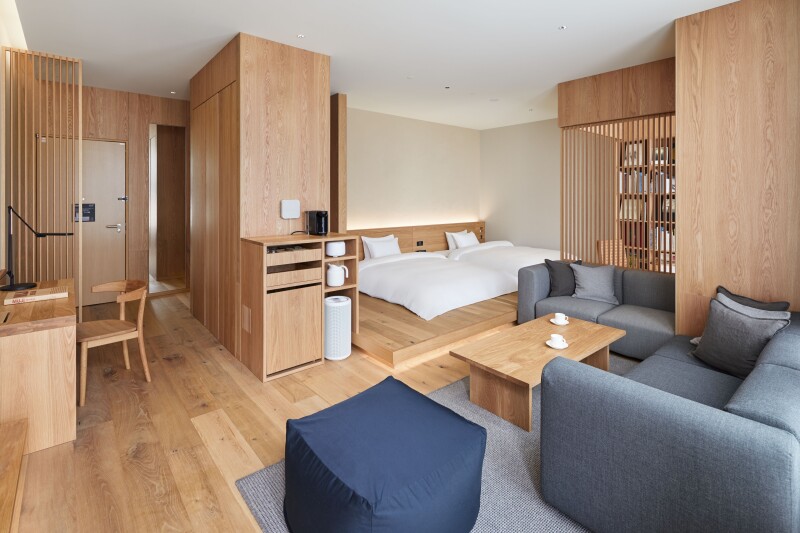
A guest room at the Muji Hotel Ginza
Courtesy of Muji Hotel Ginza
Why we love it: Stay above Muji’s flagship store and experience the brand’s design philosophy from check-in to checkout
Rates: From $300
Atop Muji’s flagship store in the Ginza shopping district, the lifestyle brand’s first hotel in Tokyo brings its signature minimalist aesthetic to hospitality, with spare but smartly designed rooms and rates that are relatively easy on the budget. The 79 guest rooms have built-in furniture and clever storage that makes the most of the compact footprint. Everything from electric tea kettles to oil diffusers is tucked into clean-lined cubbies, while wardrobes disappear behind sliding screens.
Travelers seeking traditional luxury may miss room service and in-room phones (a digital tablet connects guests to the front desk and controls the curtains), but Muji devotees will appreciate the brand’s satisfyingly organized approach to living. The restaurant Wa spotlights different Japanese regions through its rotating menu, while the Muji Coffee & Bakery is ideal for breakfast and Coffee & Salon serves coffee and cocktails at its handsome camphorwood counter.
The Okura Tokyo
Why we love it: An icon reborn, with classic Japanese service and beautifully preserved midcentury style
Loyalty program: Leaders Club (Leading Hotels of the World)
Rates: From $500
The Okura Tokyo, beloved for its impeccable Japanese service and midcentury aesthetic, originally debuted in Tokyo’s Toranomon business district in 1962 ahead of the 1964 Olympics. Following a controversial demolition, the hotel reopened in 2019 after a four-year, $1 billion rebuild led by architect Yoshio Taniguchi, whose father, Yoshiro, designed the original. Today, two new towers carry forward the hotel’s iconic design. In the Okura Prestige Tower, wood-accented rooms have deep soaking tubs and panoramic city views, while the Heritage Wing offers an even more elevated experience with its own reception and optional in-room check-in.
Sip classic cocktails at Orchid Bar, decorated with Okura lanterns and elegant kumiko wood latticework. Or reserve a seat at Sazanka, where chefs ignite wagyu with brandy to the backdrop of the Tokyo skyline. The light-filled 80-foot pool and the free Okura Museum of Art, with its impressive collection of Japanese calligraphy and ceramics, are also worth seeking out.
1 Hotel Tokyo

1 Hotel Tokyo guest rooms have panoramic views of the Tokyo skyline.
Mikkel Vang/1 Hotel Tokyo
Why we love it: Biophilic design, holistic wellness, and one of Tokyo’s greenest luxury stays
Rates: From $700
Debuted in March 2026, the 211-room 1 Hotel Tokyo sets itself apart in the city’s luxury hotel scene with its soothing biophilic design. Guests enter through a ground-floor foyer of moss-covered Oya stone before ascending to the canopy-like retreat spanning the 38th to 43rd floors of the Mori Trust Tower. Moss- and lichen-covered walls, reclaimed wood, earthen finishes, and oxygen-generating plants throughout the hotel foster a sense of calm. Sustainability remains central to the brand’s ethos, with in-room filtered water stations, optional shower timers, organic bedding and bath amenities, and minibars stocked with Japanese snacks and spirits.
Earth-toned rooms are filled with oversize sectional sofas and views of the Imperial Palace gardens, Tokyo Tower, and, on clear days, Mount Fuji. The all-day restaurant NiNi pairs French techniques with seasonal Japanese ingredients while offering a strong selection of vegan and gluten-free dishes. The lobby’s complimentary fruit stand, DIY juice station, and oat-milk matcha lattes reflect the hotel’s health-conscious approach, as do the 24/7 gym, 59-foot pool, and spa specializing in shiatsu, reflexology, and acupressure.
Palace Hotel Tokyo

The living room of a Premier Suite at the Palace Hotel Tokyo
Courtesy of the Palace Hotel Tokyo
Why we love it: A modernist retreat next to the Imperial Palace
Loyalty program: Leaders Club (Leading Hotels of the World)
Rates: From $850
Separated from the Imperial Palace by just a moat, the stylish 284-room Palace Hotel Tokyo occupies one of the city’s most enviable addresses. Originally opened in 1961, the hotel was rebuilt from the ground up before reopening in 2012 with 10 restaurants, including Michelin-starred Esterre by Alain Ducasse and the Cantonese restaurant Amber Palace, plus the serene Evian Spa with a fitness center and pool. Guest rooms are dressed in gold, cream, and soft-green tones accented by dark wood, but their standout feature is the outdoor balcony—a rarity in Tokyo.
Another distinguishing element is the hotel’s thoughtfully curated in-house experiences, from sumo tournaments to contemporary art and architecture tours with local experts. Breakfast at the Grand Kitchen is a highlight, with French-inspired pastries, duck confit, and pâté en croûte served on the leafy terrace overlooking the palace moat.
Park Hyatt Tokyo

In the Ambassador Suite at the Park Hyatt Tokyo, the hotel’s 1990s design language remains intact.
Photo by Jouin Manku/Yongjoon Choi/Park Hyatt Tokyo
Why we love it: Timeless design and a recent renovation that honors designer John Morford’s original vision
Loyalty program: World of Hyatt
Rates: From $850
Occupying the top 14 floors of Pritzker Prize laureate Kenzo Tange’s 52-story Shinjuku Park Tower, the Park Hyatt Tokyo has been an icon since opening in 1995. Following a 19-month renovation by Paris-based Studio Jouin Manku, the hotel reopened in December 2025 with updated technology, refreshed rooms, and seven fewer rooms. Check into one of its sanctuary-like accommodations, some with Mount Fuji views, and slip into a green yukata robe like the one worn by Bill Murray in Lost in Translation, filmed here in 2003. Original designer John Morford’s soothing interiors of teal carpets, Hokkaido water elm paneling, and granite and marble remain, alongside a Japanese-style sento, a glass-enclosed rooftop pool, and a 2,000-book library.
The legendary New York Grill continues to serve regional wagyu, while the jazzy New York Bar remains one of Tokyo’s classic cocktail destinations. For breakfast, the understated Kozue serves seasonal Japanese fare, including fish and house-made tofu, with room service available for guests who have early departures. Meanwhile, chef Alain Ducasse oversees the reimagined Girandole and the Peak.
Related: I Was a Sommelier at Park Hyatt Tokyo in the ’90s. Does It Still Hold Up?
The Peninsula Tokyo

The Peninsula Tokyo’s heated indoor pool is open from dawn till 10 p.m.
Courtesy of The Peninsula Tokyo
Why we love it: Spacious accommodations and a coveted location between the Imperial Palace and Ginza
Rates: From $950
Designed to resemble a lantern, the 324-room Peninsula Tokyo, near the Imperial Palace and Hibiya Park and a 10-minute walk from Ginza, draws inspiration from both Tokyo and Hong Kong, where the Peninsula Hotels brand is headquartered. Chandeliers evoke Hong Kong’s famous fireworks displays, while gold-painted ceilings reference Japanese temples. Afternoon tea here is a lavish ritual, complete with picturesque pastries and savory bites.
Although the hotel opened in 2007, its spacious guest rooms—starting at about 579 square feet—still seem fresh and contemporary, with warm neutral tones, wood-slat headboards, and residential touches like Lavazza coffee makers and walk-in closets larger than many Tokyo hotel rooms. A wedding chapel and five restaurants, including the Cantonese Hei Fung Terrace, known for its lunchtime dim sum, give guests plenty of dining options.
The Ritz-Carlton, Tokyo

The Ritz-Carlton, Tokyo has panoramic views of the city.
Courtesy of Ritz-Carlton, Tokyo
Why we love it: Floor-to-ceiling views and a world-class Club Lounge
Loyalty program: Marriott Bonvoy
Rates: From $850
Centrally located within flashy Roppongi and occupying the nine uppermost floors of one of Tokyo’s tallest buildings, the Ritz-Carlton, Tokyo, has views that keep the property on the short list of the city’s most coveted stays. Enormous, lacquer-wood-clad guest rooms have beds with Frette linens and marble bathrooms you could get lost in. For a true respite within the frenetic city, spring for a club-level room to gain access to the tranquil 53rd-floor Club Lounge, which on clear days showcases Mount Fuji. At the lounge, one-on-one business meetings take place next to leisure travelers enjoying afternoon tea, served to the music of a live harpist.
Seven restaurants and bars showcase many of the flavors that define the city’s culinary scene. In a moodily lit space, Hinokizaka offers four distinct areas for seasonal kaiseki menu tastings, sushi, tempura, and grill-based teppanyaki cuisine. Meanwhile, the 21,500-square-foot spa and tranquil 46th-floor pool are highlights of the property.
Tokyo Station Hotel

The Tokyo Station Hotel’s domed exterior dates back more than a century.
Courtesy of Small Luxury Hotels of the World
Why we love it: A tranquil hideaway in one of Tokyo’s busiest transit hubs
Loyalty program: SLH Club (Small Luxury Hotels of the World)
Rates: From $500
How can one of Tokyo’s busiest places also be home to one of its most tranquil retreats? That’s part of the magic of the 150-room Tokyo Station Hotel, tucked inside Tokyo Station, one of the city’s busiest transit hubs. It’s also one of Tokyo’s most convenient hotels, steps from the Shinkansen platforms, with a complimentary porter service that escorts guests through the labyrinthine station directly to their train car.
Refurbished in 2012, the bi-level maisonette rooms have a classic European aesthetic, with vaulted ceilings, chandeliers, silk curtains, and goose down–swaddled beds. Train enthusiasts may feel as though they’ve boarded the Orient Express: Minibars are stocked with Schott Zwiesel crystal, Noritake silver, and bottles of Japanese Hibiki whiskey to enjoy from a wingback chair. Carbonated hot baths, a fitness center, six restaurants, and four bars make it easy to linger before your train departs, while JR Rail Pass holders receive discounted rates.
Trunk (Hotel) Yoyogi Park

A park-facing guest room at Trunk(Hotel) Yoyogi Park in Tokyo
Courtesy of Trunk(Hotel) Yoyogi Park
Why we love it: A Japan-meets-Scandinavia-style retreat in a leafy corner of Shibuya
Rates: From $850
When the original 15-room Trunk(Hotel) Cat Street in Shibuya opened in 2017, few could have predicted it would grow into a mini hotel empire, with three Tokyo properties—and a fourth, Trunk (Hotel Dogenzaka), opening in 2027. All are exceptional boutique hotels with thoughtfully curated Japanese design, but the 25-room Trunk(Hotel) Yoyogi Park is the standout. Located in the laid-back Tomigaya neighborhood, it pairs sun-filled balconies overlooking Yoyogi Park with a splashy rooftop infinity pool and a jacuzzi.
If your budget allows, splurge on Trunk (House), an art-filled one-bedroom residence in Tokyo’s handsome Kagurazaka neighborhood, often nicknamed “Little Kyoto” for its geisha heritage (starting at $3,000 a night). Throughout the two-story townhouse are works by artists including Masumi Ishikawa and Chiaki Hirano, while personalized service includes a butler in a Yohji Yamamoto–designed uniform who can prepare a late-night bowl of ramen or get the party started on the home’s hidden light-up dance floor.
Related: For a Quieter Side of Tokyo, Check Into This New Boutique Hotel
Additional reporting by Keith Flanagan.


